₹6,000 Crore Siliguri–Sikkim Highway Project 2026: 52-km Four-Lane Road with Tunnels & Viaducts Could Reduce Travel Time to Just 1 Hour

GFS Realtors
We provide deep market insights and strategic advice for real estate buyers, sellers, and investors.
Expert at providing deep market insights and strategic advice for real estate

₹6,000 Crore Siliguri–Sikkim Highway 2026: A 52-km Four-Lane Road That Could Cut Travel to Just 1 Hour
A major proposed connectivity upgrade for North Bengal and Sikkim. Discover how a 52-km four-lane highway, supported by tunnels and viaducts, could transform travel between Siliguri and Sikkim.
Direct answer: Union Minister Nitin Gadkari has announced a proposed ₹6,000 crore, 52-km four-lane Siliguri–Sikkim highway — engineered with tunnels and viaducts to power through the Himalayan terrain — that could slash travel time between the two from about 3 hours to roughly 1 hour. The project's Detailed Project Report (DPR) is already complete, a significant milestone, and it forms part of a far larger highway push for North Bengal and the Northeast. Importantly, the exact alignment, tunnel locations and construction timeline haven't been made public yet, so this is a strong, advanced proposal rather than a project already under construction. Here's everything that's known so far, and why it matters.
⚡ Quick Facts — The Siliguri–Sikkim Highway
Item | Detail |
|---|---|
Project | Siliguri–Sikkim four-lane highway |
Length | 52 km |
Cost | ₹6,000 crore |
Lanes | Four-lane |
Key engineering | Tunnels & viaducts (for mountainous terrain) |
Travel time | ~3 hours → ~1 hour |
Announced by | Union Minister Nitin Gadkari (NHAI event, Kolaghat, WB) |
Status | DPR complete (alignment & timeline not yet public) |
Part of | A combined ₹12,000 cr (with a Siliguri–Darjeeling project) & a wider Bengal corridor push |
1️⃣ The ₹6,000 Crore Highway Project — What Was Announced
Speaking at an NHAI programme in Kolaghat, West Bengal, Union Road Transport & Highways Minister Nitin Gadkari announced a ₹6,000 crore highway project connecting Siliguri and Sikkim. It was unveiled alongside a separate ₹6,000 crore Siliguri–Darjeeling alternative highway — a combined ₹12,000 crore commitment to transforming access to the hills.
The headline is simple but powerful: a dedicated, modern, four-lane road built specifically to make the Siliguri–Sikkim journey dramatically faster and more reliable than today's route.
2️⃣ The 52-km Four-Lane Road — Route & Components
At the heart of the project is a 52-km, four-lane highway. Four-laning matters because the current primary link to Sikkim — NH-10 along the Teesta — is largely a two-lane mountain road, prone to congestion, landslides and seasonal closures.
Key points on the road:
52 km of purpose-built four-lane highway designed for faster, safer, higher-capacity travel.
Built for the terrain — rather than simply widening existing roads, it uses major engineering structures (below) to take a more direct, resilient path.
Alignment still to be revealed — the detailed route and the exact locations of its tunnels have not yet been made public, so specifics will emerge as the project advances.
3️⃣ Tunnels & Viaducts — Engineering Through the Himalayas
This is what makes the project special. The Siliguri–Sikkim corridor runs through young, steep, landslide-prone Himalayan terrain — the very reason NH-10 struggles. The new highway proposes to overcome this with tunnels and viaducts:
🚇 Tunnels bore through hills instead of winding around them — shortening distance, avoiding unstable slopes, and offering protection from landslides and weather.
🌉 Viaducts (elevated road sections on pillars) carry the highway over valleys, rivers and difficult ground — keeping gradients gentle and the route direct.
Together, these structures do two things: they cut travel distance and time, and they make the road far more resilient to the landslides and disruptions that plague conventional hill roads. It's the same modern approach transforming mountain highways across India.
4️⃣ Travel Time: From ~3 Hours to ~1 Hour
The most eye-catching promise: travel between Siliguri and Sikkim could fall from around 3 hours today to approximately 1 hour.
Why that's transformational:
⏱️ Two hours saved, each way — a huge difference for tourists, businesses, patients, students and daily travellers.
📅 Predictability — tunnels and viaducts mean fewer weather/landslide delays, so travel times become reliable, not a gamble.
🛡️ Safety — a modern four-lane road with engineered structures is far safer than a congested, slide-prone mountain route.
A one-hour Siliguri–Sikkim link would effectively bring the two regions into each other's daily orbit.
5️⃣ Tourism & Regional Connectivity
Sikkim and the Darjeeling hills run on tourism — and connectivity is the lifeblood of tourism. A faster, more dependable highway could:
Boost Sikkim tourism — easier, quicker, year-round access encourages more visitors and shorter-notice trips.
Strengthen Siliguri as the gateway — as the base city for the hills, Siliguri's hotels, transport operators, markets and businesses benefit directly from smoother hill access. (This complements the proposed Adani-backed Darjeeling–Kurseong ropeway and the North Bengal hospitality boom.)
Help travellers — less fatigue, more reliable schedules, and safer journeys for everyone from families to tour operators.
6️⃣ Economic Development Outlook
Beyond tourism, better connectivity is a broad economic multiplier:
🚚 Trade & logistics — faster movement of goods between Sikkim, Siliguri and the rest of India lowers costs and boosts commerce.
🏪 Regional businesses — transport, retail, hospitality and services along and around the corridor stand to gain.
🧑💼 Jobs & investment — major infrastructure creates construction employment and makes the region more attractive to investors.
🏙️ Siliguri's momentum — stacked with the Bagdogra airport expansion, NH-327 four-laning and more, this reinforces Siliguri's rise as North Bengal's economic hub. See Siliguri's Best Localities to Invest In: A Data-Driven Ranking and the GFS North Bengal Real Estate 2026: Complete Guide.
7️⃣ Project Timeline & Execution — Where It Stands
Here's the honest, up-to-date status:
✅ DPR complete. The Detailed Project Report for the 52-km Siliguri–Sikkim highway is finished — a meaningful step beyond a mere idea, as the DPR defines feasibility, design and cost.
⏳ Alignment & tunnel locations: Not yet public.
⏳ Funding sanction: No separate funding-approval announcement has been reported yet beyond the project announcement.
⏳ Construction timeline:Not announced — no start or completion dates have been stated.
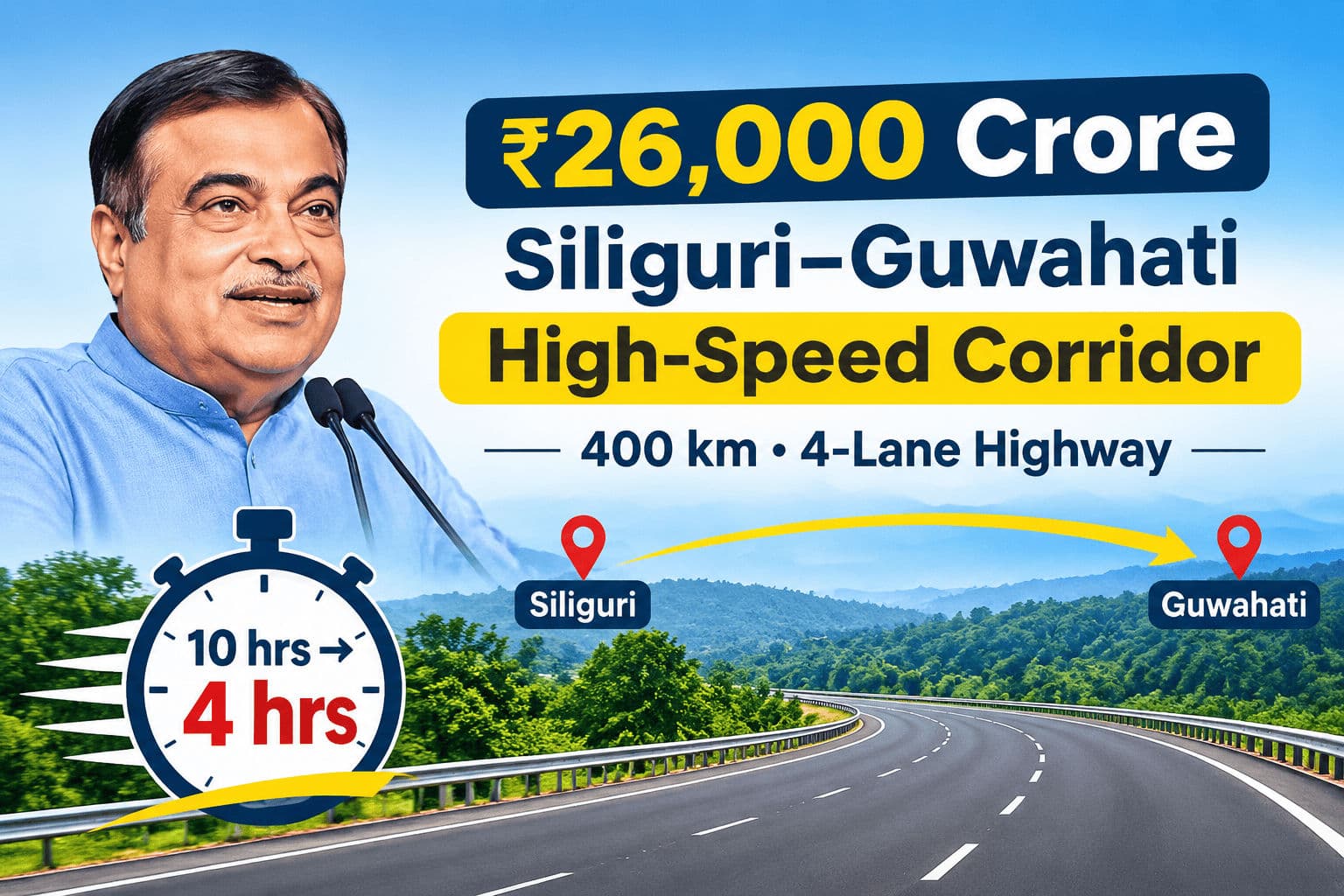
The bigger picture: this project is one of several in a sweeping North Bengal and Bengal highway push — including a ₹6,000 crore, 77-km Siliguri–Darjeeling alternative highway (DPR under preparation), a 400-km Siliguri–Guwahati corridor (₹26,000 cr), a Gorakhpur–Siliguri expressway (₹38,000 cr), and the ₹192.65 crore NH-10 slope-protection works. Track them in the North Bengal Infrastructure Tracker, our ₹192.65 Crore NH-10 Slope Protection and West Bengal Infrastructure Financing Push 2026 breakdowns.
⚖️ An Honest Note
A realistic lens:
Announced & DPR-ready, not under construction. This is an advanced proposal; execution, sanction and timelines are still to be confirmed.
Big mountain projects take years. Tunnel-and-viaduct highways in Himalayan terrain are complex and typically multi-year builds.
Details will evolve. Route, cost and schedule can change as the project moves from DPR to sanction to construction.
The direction is genuinely exciting — but track delivery milestones rather than treating the one-hour journey as already here.
🔑 Key Takeaways
🛣️ A proposed ₹6,000 crore, 52-km four-lane Siliguri–Sikkim highway has been announced by Union Minister Nitin Gadkari.
🚇 Tunnels & viaducts would cut through Himalayan terrain — shortening the route and resisting landslides.
⏱️ Travel time could drop from ~3 hours to ~1 hour — a transformational, reliable, safer link.
🧳 Tourism & business win — easier Sikkim access strengthens the hills' economy and Siliguri's gateway role.
🚚 Economic multiplier — faster trade, logistics, jobs and investment appeal across the corridor.
✅ DPR is complete — a real milestone — but alignment, funding sanction and construction timeline are not yet public.
⚖️ Advanced proposal, not yet built — track progress; big mountain highways take years.
👤 About the Author
Written by the Siliguri Properties Team — a hyperlocal resource for Siliguri & North Bengal, turning major infrastructure announcements into clear, useful insights for residents, travellers and investors.
📚 Related Reads
₹192.65 Crore NH-10 Slope Protection Project: Safer Sevoke–Rangpo Connectivity
West Bengal's Infrastructure Financing Push 2026: NABARD, ₹7,000 Cr Roads & 4 Bridges
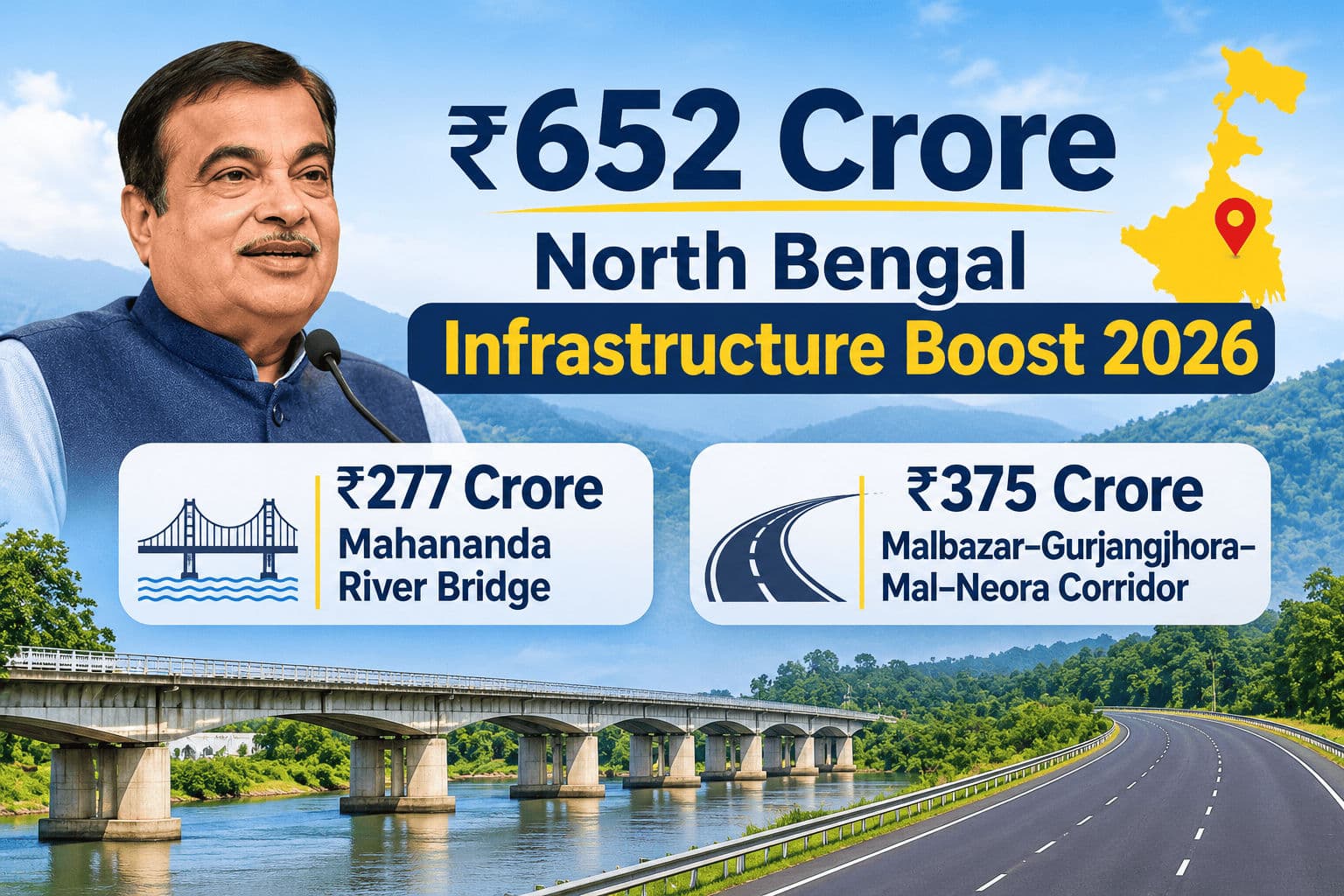
₹652 Crore North Bengal Boost: Mahananda Bridge & Dooars Road Development
Adani Group Eyes the Darjeeling–Kurseong Ropeway: Tourism, Infrastructure & Real Estate
North Bengal's Hospitality Boom: Every Major Hotel Brand Coming
Siliguri's Best Localities to Invest In: A Data-Driven Ranking
🏡 As North Bengal Connects, Siliguri Rises
A one-hour link to Sikkim would be a landmark for the entire region — and Siliguri, the gateway, stands to gain the most from every connectivity leap. The time to understand the market is before the roads are built.
👉 Explore land, plots, flats & commercial opportunities across Siliguri & North Bengal on SiliguriProperties.com and GFS Realtors.
📞 Talk to GFS Realtors — Sanat Trade Center, 1st Floor, Sevoke Road, Siliguri-01. Call +91 99320 66666. With 20+ years in North Bengal's market, we help you read the region's momentum and make well-verified property decisions.
This article is general informational content based on reported statements about the proposed ₹6,000 crore, 52-km four-lane Siliguri–Sikkim highway announced by Union Minister Nitin Gadkari, for awareness purposes only. The project's DPR is reported complete, but the alignment, tunnel locations, funding sanction and construction timeline have not been officially confirmed and are subject to change; announced/proposed projects may differ from eventual delivery. Travel-time estimates are as reported. This is not investment or legal advice. Please verify current project details with official sources, and consult a qualified professional before making any property or travel decisions.